
Sand Dams and Water Harvesting: A Starter Brief
Water security in dryland landscapes is not only about finding new sources. It is about keeping more rain where it falls, storing it intelligently, and managing it as part of a wider restoration system.
How sand dams work
The source paper explains sand dams as low-profile structures built across seasonal sandy streams. Rather than storing water in an exposed open pond, they slow runoff and allow clean sand to accumulate behind the wall, with water held between the sand particles.
That underground storage reduces evaporation, protects water quality better than open standing water, and can be accessed through scoop holes, shallow wells, pumps, or infiltration galleries depending on the local design.
Why catchment context matters
A sand dam is most useful when it is treated as one component in a landscape system. If upstream catchments are badly eroded, the structure can fill with silt instead of sand. If riverbanks remain unstable, heavy flows can damage the investment.
The article consistently ties water infrastructure to catchment rehabilitation, vegetation protection, and community water governance rather than treating the structure as a standalone fix.
Other systems communities can use
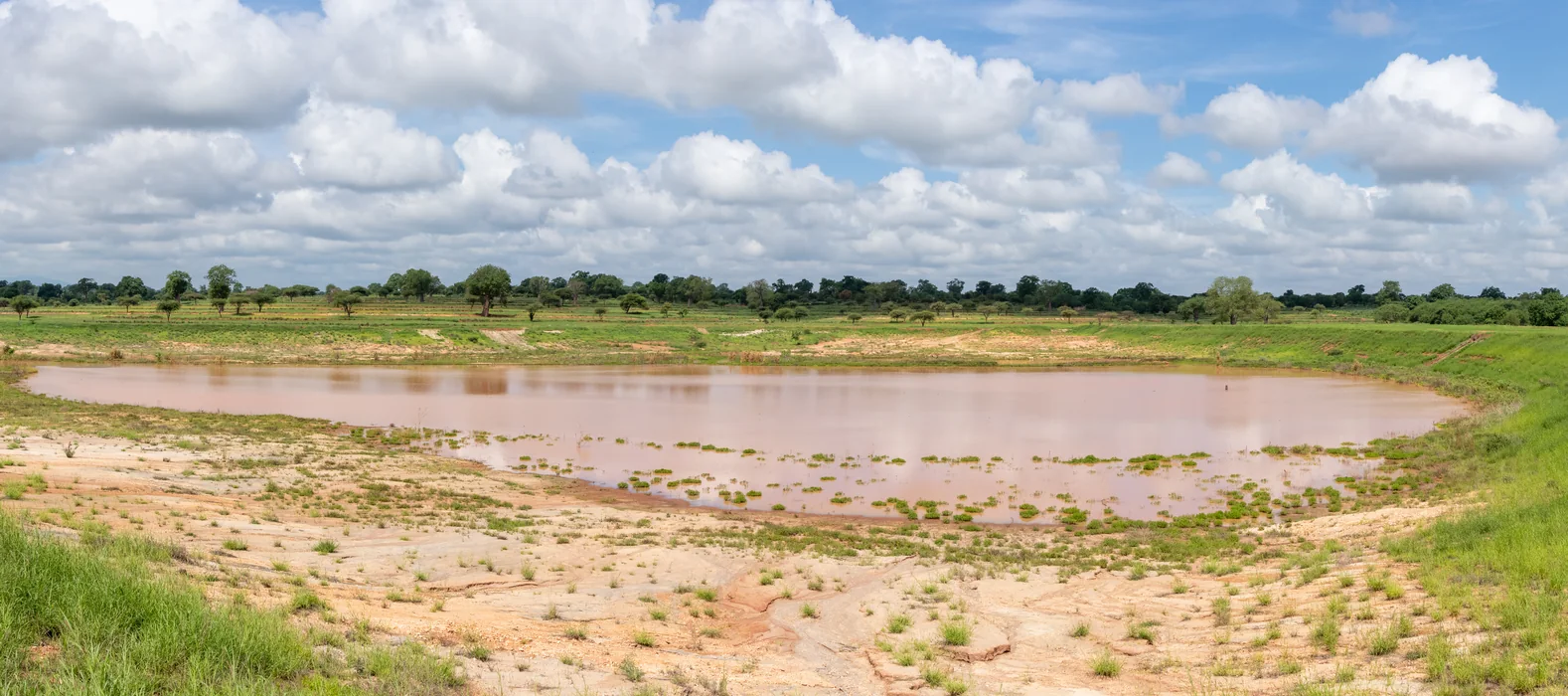
The paper also points to roof water harvesting, earth pans, farm ponds, contour bunds, terraces, infiltration pits, zai pits, and planting basins as practical options in different contexts.
The core lesson is selection, not imitation. The best system depends on slope, rainfall pattern, soil, stream behavior, intended use, and the community’s capacity to maintain what is built.